Get Lost Trail Race 2021

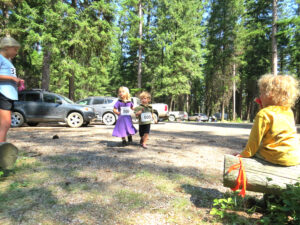
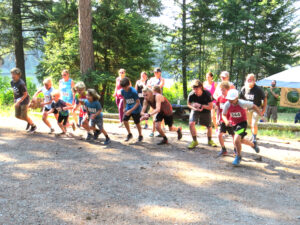
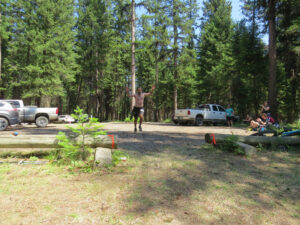
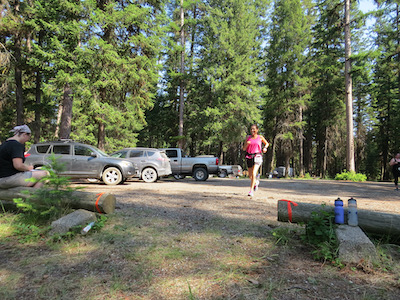
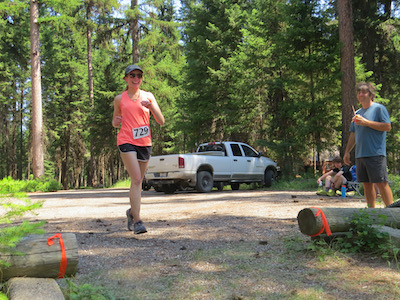
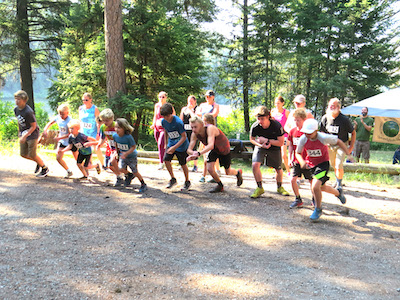
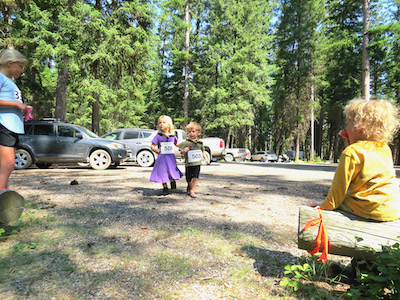
On Sunday, July 11th, 2021 fifty runners and walkers assembled at Lost Lake for the 3rd Get Lost! Trail Race, hosted by Okanogan Highlands Alliance (OHA). Supported by friends, family, and a host of volunteers stationed throughout the trails, participants navigated either a three-mile, a seven-mile, or a 14-mile race course, while the kids took on a fun run on OHA’s Lost Lake Preserve. There was something for everyone!

Bill Kresge, participating for his third time says, “it is a beautiful venue, the woods were shady and cool, the lake great for a dip after the run or walk. What could be better? You get to support a great organization, spend the day with wonderful people, all while challenging yourself on a 3, 7, or 14 mile run (or walk).”

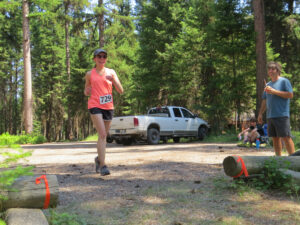
The atmosphere on the race course was relaxed, supportive and friendly, with both experienced and first-time trail runners hitting the trail together. Runners broke course records, they set new personal records, and had fun doing it. Danika Smith of Tonasket reports, “It wasn’t even a question whether I was going to participate in the annual OHA event. As a family we look forward to it every year. Finishing the race feels like a victory, and it is really rewarding to support an organization that helps to preserve some of my most favorite places in our region.” Korbin Forsman (Republic) set a new men’s course record for the 5k (3 mile) race, with a time of 22:23, and Jody Evans (Oroville) set the women’s record at 28:09.  The seven-mile women’s title was taken by Chelsea Shaefer (Oroville), who set a new course record of 1:07:13, while Rich Beukema (Wenatchee) held onto his title, winning the men’s division with a time of 58:02. Kirsten Casey (Poulsbo) blazed through the course, setting a new women’s in the 14-mile race with a time of 2:10:11, and Sibley Simon (Santa Cruz, CA) led the men’s division, finishing in 2:40:08. Special recognition goes out to the fleet of kids under 12 who challenged themselves on the 5k and in the kids race! Full race results can be found at: https://ultrasignup.com/register.aspx?did=83316.

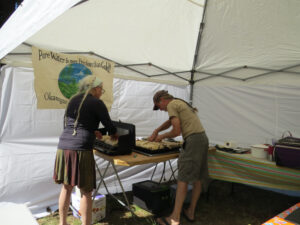
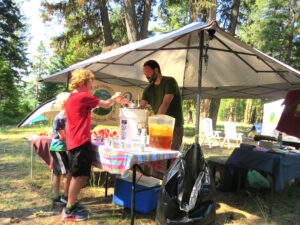
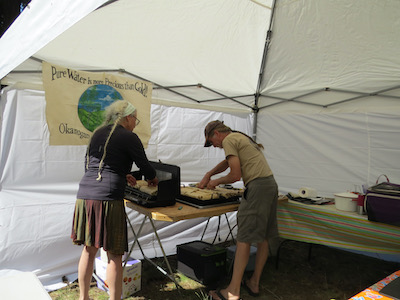
Trail races have many moving pieces, and this event happens smoothly thanks to volunteers who donate their time, expertise and resources every step of the way. Volunteers took on: managing runner registration and designing unique race merchandise (Rick Massey), clearing and marking the trail in advance of the race (Rose and André Corso, Marija Welton, Owen, Andrew and Jordon Weddle and Indigo Tetrick), providing aid stations and runner support during the race (Rick Massey, Charles Walker, Sarah Kaiser, Marija Welton), preparing and serving a nutritious and delicious post-race meal (Hanna, Sarah and David Kliegman), and cleaning up after the event (too many people to count). The kids had an amazing day, thanks to Tyler Graves, Jordon Weddle, Alisa Weddle, John McReynolds, and Norm and Diana Weddle who guided kids through their race, made shaved ice, and helped with a piñata! Kate Miller and Kevin Lepley stepped into many roles throughout the day, from timing, to maintaining an aid station, to photographing the event.

Many thanks go out to the business sponsors who helped to support this year’s runners. Lee Frank’s Mercantile, the US Forest Service, and North40 Outfitters contributed to race prizes, and Big 5 Sporting Goods contributed to runner nutrition.

Jen Weddle, co-director of OHA says, “The Get Lost Race is a great representation of how we can be inspired by the natural world and by each other. The Okanogan Highlands are a beautiful place to meet up, spend time outside, and challenge one another to reach new heights. We want to thank everyone for their help and participation in supporting the event and OHA, and we hope to see you out on the course next year!”

Runners came from far and wide to enjoy Lost Lake, support outdoor recreation, and learn more about Okanogan Highlands Alliance. OHA is a non-profit organization that works to educate the public about watershed issues, including the environmental threats of large-scale mining. For more information go to okanoganhighlands.org

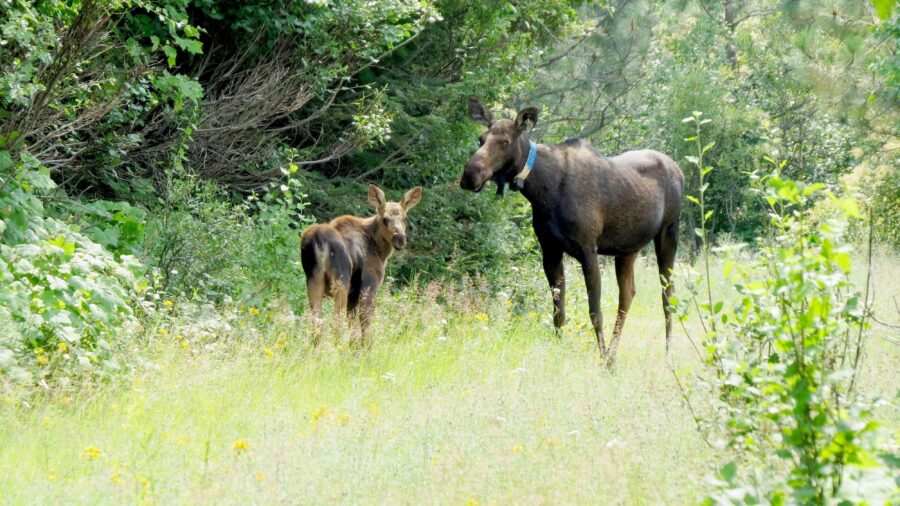
Moose In Washington: Living on the Edge

…with Carrie Lowe of the Washington Department of Fish and Wildlife

Friday, September 24, 2021 at 7:15pm at the Tonasket Elementary School Parking Lot

Photo Credit: Carrie Lowe

Moose: they live alongside us, from the valley floor to the highlands, and despite their  enormous size, are only rarely seen. Join Carrie Lowe, wildlife biologist with Washington Department of Fish and Wildlife to learn about the life history, population trends and challenges facing moose in our area.

Carrie Lowe works with game and nongame species in Spokane, Lincoln, and Whitman Counties.  Prior to coming to Washington in 2013, Carrie spent time teaching at an outdoor science school in North Carolina, and worked on a variety of research projects, including loggerhead sea turtles in Georgia, mesocarnivores in the Sierra Nevada, black bears in Louisiana, grizzly bears in Montana, and bighorn sheep in Hells Canyon. She received her Bachelor’s degree in Biology from Hope College in her hometown of Holland, MI and her M.S. in Wildlife & Fisheries Science from the University of Tennessee, Knoxville.

 Join OHA in a unique, free community event – enjoy Carrie’s engaging in-person talk from a blanket, a camp chair or your vehicle, listen through your FM radio!

Questions? jen@okanoganhighlands.org

COVID Precautions will be in place: social distancing, individually wrapped desserts available by donation

2021 Annual Membership Meeting: June 24 4:30pm on Zoom

Join us via Zoom for OHA’s 2021 Annual Membership Meeting! Check in on recent and upcoming events and our work in mine monitoring, habitat restoration and education. Ask questions, share ideas, and visit with OHA’s board and staff.

We will also be conducting elections for three board positions – OHA’s seven board members are elected by the membership and serve for 2-year terms.

We hope to see you there!

For the meeting link, send an email request to: info@okanoganhighlands.org

Looking for Trail Stewardship Opportunities?

Over this past year OHA has connected with a group of organizations and agencies who are all invested in caring for trails in northeast Washington. Kristin Ackerman (Pacific Northwest Trails Association) has been instrumental in making sure that Okanogan County is included in the trails coalition (thank you Kristin and the PNTA!) One outcome of this effort is a website, created by The Tri-County Economic Development District where you can look and find LOTS of opportunities to volunteer for trail work (including OHA’s trail work parties), both near and further afield in NE Washington.

Click here for the online calendar created and maintained by of trail work parties (including OHA’s trail days).

Tuesday Trail Days! May-July, 2021

The snow has melted in the highlands, flowers abound, and we are excited to get out and help care for the lovely highlands trails again! In the next couple of months OHA will be out hiking, scouting trail needs, helping to clear the trails, getting some exercise, and enjoying nature and each others’ company. We will keep our groups small and respect physical distancing. We can’t wait! Below are some details about our upcoming trail stewardship events. We hope you will join us!


Trail Day Goals

  • Clear the trails of grass and branches
  • Improve the trail surface (tread) as needed
  • Make notes of other trail maintenance needs
  • Have fun, get some exercise and enjoy the day


Trail Day Calendar:

Note: We may add some days depending on trail needs, but we wanted to give you something to put on your calendars. And now…let us present… OHA’s Tuesdays on the Trails! 


Trail Day Details:

  • Transportation: travel in family groups or social bubbles (see links above, in the calendar section for Google Map directions)
  • Things to bring: lunch, water, snacks, work gloves, sturdy hiking shoes or boots.
  • Optional things to bring: bug spray, sunscreen, hat, hand tools (loppers, pruners, garden hoe, etc.) that you like to use or think will be helpful

Complete the OHA Volunteer Survey for email reminders and more event details


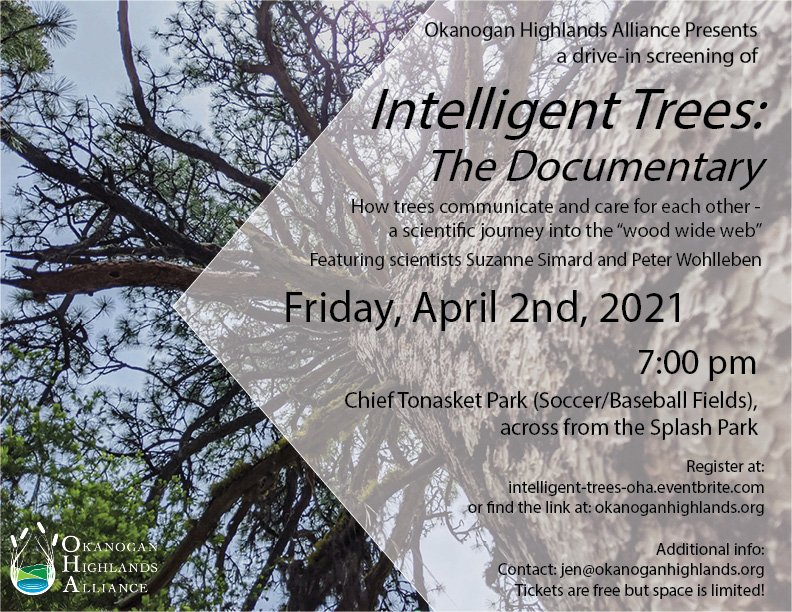
Intelligent Trees: the Documentary, Drive In Film!

Join OHA in learning about how trees (yes, trees) communicate, and leave with a whole new perspective on forests!

This event is free (thanks to our sponsors, George Thornton and Lee Miller), but space is limited, so reserve your space by clicking here.

Come Early (6:45-7:15) to park and get set up. Sound will be broadcast through your FM radio.

Film starts at 7:30

If you would like to help OHA provide free educational events to our community by sponsoring one of our drive-ins or educational events, contact Jen and Sarah at: info@okanoganhighlands.org

Can’t wait to see you there!

Podcast! Washington’s Not So Common Loons S1:E5

Who would have thought that our very own Okanogan Highlands is a great place to view one of the world’s most charismatic and endearing bird species? Although not many common loons nest in Washington any more, breeding pairs and chicks can be found on several highland lakes throughout the summer months and into the fall. This month’s Highland Wonders Podcast features Daniel and Ginger Poleschook – dedicated researchers, educators and advocates for common loons. They share what they have learned over 26 years of studying the species and getting to know the individual loons that inhabit our local lakes. Enjoy!

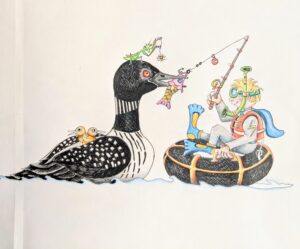
Jack, Nature Detective, Season 1, Episode 5: Washington’s Not-So-Common Loon

Illustrated by Diana Weddle

One warm spring day out on Bonaparte Lake, Jack the Nature Detective is fishing with his dad. Suddenly he hears a strange noise, “it sounds like a cross between a wolf’s howl and a chicken’s squawk.” Jack squints across the lake and he can’t believe what he is seeing! It’s a…a…penguin? It’s a very large bird, anyway, and black and white. What else could it be? Jack keeps watching. The bird is swimming around like a duck and keeps diving under water in a very penguin-like way. Jack is puzzled, though. He wonders aloud, “I thought that penguins live on the bottom of the globe, and we live closer to the top. If this is a penguin, it is very far from home. How could this be?”

From that day on, Jack watches his mystery bird friends often. There are two of them. He notices that they are good fisher-birds, and that they built a nest on a grassy tuft on the edge of the lake. One early summer day Jack sees something especially amazing. “Look!” he shouts. “One of the birds is carrying a fuzzy little baby on its back!” All of a sudden, the bird starts (what can only be described as) yodeling. She sounds scared and upset. Jack looks up and sees a bald eagle soaring above the lake. As the bald eagle is about to dive, Jack’s mom wades out into the lake waving her arms and yelling, “HEY! GET AWAY!” The eagle moves on, and the mama and baby glide away.

By this time, Jack is pretty sure this amazing bird is not a penguin, but he is still not sure what it could be. He decides, “It’s time to get to the bottom of this mystery.” Back at home, Jack gets to work with his favorite bird book, The Sibley Field Guide (it has, in the Nature Detective’s opinion, the best pictures). Soon Jack realizes that that his hunch was right – the mystery bird isn’t a penguin at all. It is a bird called the common loon! Now that he knows who they are, the Nature Detective can’t wait to learn more! Fortunately, the newest Highland Wonders Podcast is out, featuring Daniel and Ginger Poleschook, so Jack and everyone he knows can learn about common loons and what we all can do to protect them.

Podcast! The Secret Life of Bats, Highland Wonders S1:E4

Jack, Nature Detective with a Townsend’s Big Eared Bat. Illustrated by Diana Weddle.

How do you feel when someone starts talking about bats? Warm and fuzzy? Uneasy? Disgusted? Cautiously curious? In the fourth episode of the Highland Wonders Podcast, The Secret Life of Bats, Roger Christophersen of the North Cascades National Park addresses our ideas about bats, and sparks a sense of wonder at these flying, fuzzy, leathery insectivores. To learn more about bats, how and where they live, and how we all can support bat populations (and why we should), check out the Highland Wonders Podcast wherever you normally get your podcasts! And now, a story from our intrepid Nature Detective. Enjoy!

Jack, Nature Detective: season 1, episode 4: The Secret Life of Bats

Jack’s family is enjoying a weekend camping in the highlands, escaping the heat of summer for a few days, and exploring the forests and lakes of the Okanogan. As they sit around the campfire, they notice something winging through the air in the little clearing, fluttering here and there. It’s flight pattern seems different from a bird, and the creature itself is bigger than the insects that Jack normally sees. “Eek! It’s a bat!” Jack’s mom exclaims. Jack gazes into the fire, thinking.

“What are bats, anyway?” Jack thinks about what he knows about bats, trying to sort them into a group with other animals he knows. Recently, he had a chance to get a close-up look at a bat during the day, as it clung to his house, sleeping. It was definitely fuzzy, with a pointy little snout. 

“I don’t think they are birds because they don’t lay eggs. If they DID lay eggs, how would that even work? They hang upside down, and don’t have nests. The eggs would just crack on the ground! That would be bad.” 

“Are they insects? Some insects are furry, like bumble bees. Maybe bats are insects?” Jack is not sure. He thinks, “Bees and other bugs don’t take very good care of their babies. But I heard that bat moms carry their babies around and feed them.” Jack glances over at his mom, who is giving his little sister a piggy back over to their tent. “Maybe bats are more like people. Mammals. Mammals?!? FLYING MAMMALS?!?! Is that possible?” 

When they get home, Jack asks his mom to look up pictures of bats on the internet. One image of a bat skeleton pops up and Jack notices that the wing looks a lot like a hand – it even has a little thumb! He also notices their ears, “My what big ears you have, little bat!” Jack cackles at his own Little Red Riding Hood reference. So far, the evidence points to bats being mammals. But Jack still has a lot of questions. “Do bats have predators? Why do bats have big ears? Do they hibernate in the winter or go south like birds do? How high can they fly? I can’t wait to learn more!” Luckily, Roger Chistophersen, of the North Cascades National Park has the answers to some of Jack’s questions in the most recent, very fascinating, Highland Wonders Podcast! 

Stay tuned! Jack will continue to solve nature mysteries on topics related to upcoming episodes of the Highland Wonders Podcast. Episodes and stories can be found at: okanoganhighlands.org/education/highland-wonders/ or on Apple Podcasts, Google Podcasts, Spotify, or wherever you find your podcasts.

The Backstory on Jack:

Meet Jack, Nature Detective: Jack is inquisitive, skeptical, creative, quirky, determined, and a friend to ALL critters. His observations of subtle clues and brilliant reasoning make him, quite possibly, one of the world’s most talented nature detectives. Like most of us, Jack’s understanding of the world comes from his own life experiences. He is five years old, and his investigative skills are top notch. If you were to stop by his house you might find our Nature Detective in the midst of an experiential study of squirrel movement, or determining the optimal shelter and food stores for his new pet grasshopper, named Grasshopper. Today, we will share a mystery that Jack uncovered in the Okanogan Highlands. What clues can you uncover in the story?

Podcast! Bighorn Sheep of the Okanogan, Highland Wonders S1:E3

OHA is delighted to ring in the new year with Episode 3 of the Highland Wonders Podcast: Bighorn Sheep of the Okanogan. In this hour-long episode, Jeff Heinlen of the Washington Department of Fish and Wildlife shares his fascinating expertise and entertaining stories of bighorn sheep, the history of the herds in our valley, and gives an update on how our local herds are currently doing. And now without further ado, a story from Jack, Nature Detective!

Jack Nature Detective with a sneaky bighorn sheep illustrated by Diana Weddle

Jack, Nature Detective: season 1, episode 3: Bighorn Sheep of the Okanogan

Meet Jack, Nature Detective: Jack is inquisitive, skeptical, creative, quirky, determined, and a friend to ALL critters. His observations of subtle clues and brilliant reasoning make him, quite possibly, one of the world’s most talented nature detectives. Like most of us, Jack’s understanding of the world comes from his own life experiences. He is five years old, and his investigative skills are top notch. If you were to stop by his house you might find our Nature Detective in the midst of an experiential study of squirrel movement, or determining the optimal shelter and food stores for his new pet grasshopper, named Grasshopper. Today, we will share a mystery that Jack uncovered in the Okanogan Highlands. What clues can you uncover in the story?

“Hey dad, want to hear a riddle?” Without waiting for an answer, Jack recites, “What has a hard head, loves to climb and likes to lick salt?” His dad knows immediately: “Your sister.” “No!” Jack yells. “A wild great horn…” “…Owl?” his dad finishes for him. “No!” Jack yells again. “They have four legs, no wings, and huge, curly horns. We saw one on our hike today!”

Today Jack and his cousins adventured up the Whistler Canyon Trail near Oroville. After climbing the long, steep path, they stopped on a bench to catch their breath and look around. The kids brought their binoculars, so they scanned the hillsides and cliffs for signs of life – and there it was.

Silhouetted against the sky, high up on the edge of a cliff, an animal was standing very still. As Jack reported, it had four legs, a sturdy body, no wings, and a huge, curled head ornament. As they watched, the animal picked its way along the cliff, and the kids gasped to see it balancing so precariously on the rocks. “How does it not tip over? Its head looks so heavy!” Jack wondered out loud. “And how does it climb those rocks like that? I would fall!” As they watched, more animals “appeared” (they had been there the whole time but were so well camouflaged and so still that the kids hadn’t seen them). Some were laying down, others munching on something. Jack was curious why different animals had different size horns.

What was this amazing creature? Jack, the Nature Detective used his trusty process of elimination, “It can’t be a cat or a dog – they don’t have horns. It can’t be a goat – they are white, and live high in the mountains. Could it be a deer? Definitely not!” If there is one thing Jack knows, it is that: deer have antlers, sheep have horns.” Jack’s cousin, Fred adds, “Those have to be horns because antlers fall off, and those horns look like they have been growing for a loooong time.” The cousins decided that it must be a sheep! Elliot, who is a little older than the others, has seen signs along the road, warning drivers to watch out for “great horned…no, wait…bighorn sheep!” Jack, the Nature Detective is satisfied for now, but he is excited to listen to what Jeff Heinlen, from the Department of Fish and Wildlife, has to say about the bighorn sheep of Okanogan County. That should help him know for sure. Stay tuned! Jack will continue to solve nature mysteries on topics related to upcoming episodes of the Highland Wonders Podcast. Episodes and stories can be found at: okanoganhighlands.org/education/highland-wonders/ or on Apple Podcasts, Google Podcasts, Spotify, or wherever you find your podcasts.

Year End Letter 2020

Dear Friends,

As snow falls in the Okanogan Highlands, blanketing each twig and branch in a fluffy coat, we are looking back at a year that has been anything but usual. From filing a Clean Water Act citizens suit to reimagining the ways that we do most of our work, it’s been quite a year. Perhaps more than ever we are thankful for the inspiration, resourcefulness, and steadfast support of our board, our members, and our community far and wide to be able to work to protect and restore the highlands and provide a window into the natural world as we navigate life in a pandemic.

Your support at this time is critical to hold the companies responsible.

OHA’s Clean Water Act suit is intended to enforce limits imposed by the mine’s discharge permit that require the waters near the mine to be almost as clean as they were before mining. The lawsuit is still in early stages, but it has already been met with legal resistance from the mining companies, through motions to dismiss and a baseless counterclaim against OHA. Despite the companies’ delay tactics, distractions, and attempts to intimidate OHA, the data and the law are clear. The companies are in flagrant violation of their permit, and we are working to hold them accountable for their pollution. 

As always, OHA will use scientific analysis of the data to support our efforts. We are building our team of technical experts, and your support will enable us to hire them to dive deep into the data, create careful analyses, and present their findings to the court while facing the company’s team of attorneys.  

Please consider expanded support to hire the experts needed to bolster this legal effort.

COVID has demanded, and continues to demand, creativity and flexibility in all of our lives. OHA’s efforts to engage the community in the natural world are no exception. After taking stock of the situation and assessing priorities this spring and summer, we are excited to be stretching into new forums to engage the public in the wonders of the Okanogan Highlands. We are creating videos and podcasts, writing stories, learning together about highland wildlife through our social media platforms, and conducting maintenance on local trails. We are also developing new projects such as: our Community Art Project that will install artworks reflective of the Okanogan Highlands’ biological diversity, and our Lost Lake Preserve Wetland Boardwalk that will enable visitors to appreciate the wetland in a low-impact way.

With your support OHA will build creative ways to help people connect with nature.

Our efforts to improve highland habitats is ongoing. We continue to be inspired by the positive changes  happening at the Triple Creek restoration site, as our plantings flourish, the streambed gets closer to the floodplain, and the habitat becomes a healthier wetland. This spring the stream overflowed its banks in part of the project area, showing connectivity for the first time since we started our work there!

Your donations enable OHA to continue our restoration work in the long term.

Life in the COVID era is a grand experiment, but OHA’s commitment to our mission is unwavering. We are taking action to prevent environmental degradation on Buckhorn. We are fostering the conservation of natural resources throughout the highlands. We are engaging our community with nature in the hopes that people will work to protect the precious earth on which we all depend. 

As we look forward to 2021, we are filled with optimism that has come with the prospect of a new administration in the White House. We are filled with hope of the time when we will be able to gather again, safely, with friends and family. We are filled with determination as OHA mounts a legal effort to ensure that our area is not left with the toxic remnants of here-today-gone-tomorrow mining companies. OHA is steadfast in our efforts to protect our environment and build our community.

In the spirit of optimism, hope, and determination, please give generously. We can’t do this work without you.

Onward!

Jen Weddle and Sarah Kliegman, co-Executive Directors

P.S. OHA is a 501(c)3 nonprofit organization. Your contribution may be tax deductible. A provision in the 2020 CARES Act enables taxpayers who take the standard deduction to claim a charitable deduction of up to $300 ($600 if married) for cash donations made in 2020. Other benefits apply for those who itemize charitable donations.

Click Here to Donate Online