Surface Remediation Well Underway, Fall 2018
Kinross began removing construction fill from the surface of the mine site and putting it underground even before they finished mining, but that has not reduced the pollution problem. Once mining was complete in 2017, Kinross rapidly began moving the rest of the construction fill into the underground mine shafts; even the fill that was under the treatment facility was moved. To do this, they dismantled the facility without authorization, leaving the mine site without a working treatment facility for a period of six months.
At this point, most of the buildings have been removed and the ground surface has been recontoured and seeded. On the surface, things are looking more natural. However, downgradient wells are still high in sulfates and other contaminants.
Waste Rock
Change Over Time: Mine Portals
Upper Portal
Gold Bowl Portal
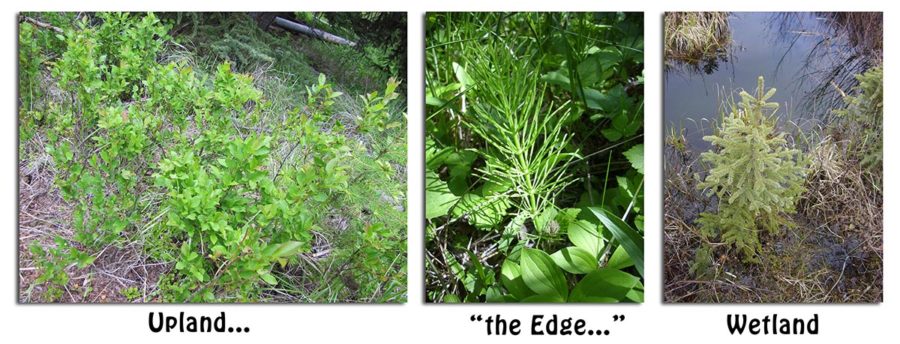
Upland Landscapes
At higher ground in the Preserve, you will notice a change in the vegetation and habitats surrounding you. Click here to view our photo album of the upland ecosystems at the Preserve.
Video Test
(TEST) Nature’s Engineers: How Beavers Restore Habitat

Beavers possess remarkable engineering skills, which they combine with unparalleled work ethic to the benefit of streams and wetlands. On January 7th, 2011, this event focused on how beavers create the stream conditions and wetlands needed by an array of other plants and animals. In the process, beavers are sub-irrigating by raising the water table and increasing groundwater recharge in the Okanogan Highlands, making more water available for everybody during the low flows of late summer. Guest speakers who work with beavers in the field shared from their experiences and answered questions about these curious creatures. OHA also shared some exciting updates about the work of beavers on two of our restoration sites.
HTML Embed (more size flexibility)
Part 1: Introduction
Part 2: The Land’s Council
YouTube Embed (no YouTube logo, one size)
The Wetlands
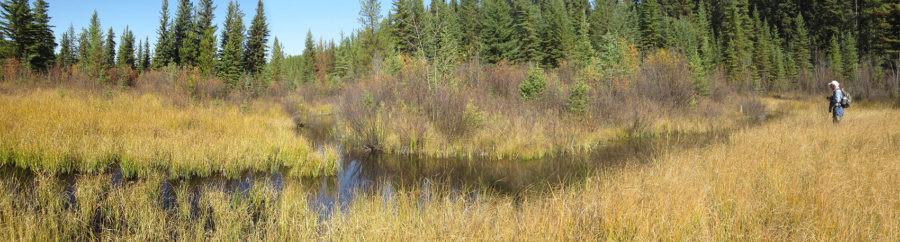
Click here to view our full photo album of the Lost Lake wetlands year-round!
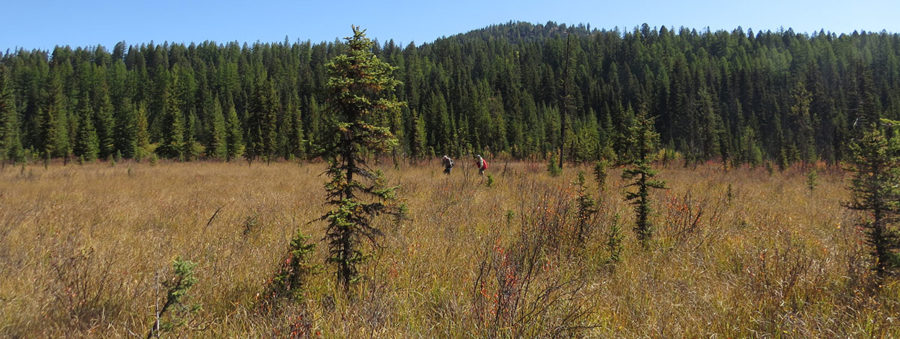
“The wetlands within the Lost Lake Preserve are of high conservation value due to the rare plants and plant communities which occur there and the fact that the site retains excellent ecological integrity despite numerous human stressors in the surrounding landscape. The site supports numerous wetland types such as a calcareous fen, shrub swamp, and forested seepage swamp. Of particular interest is the calcareous fen, which are rare in Washington and are primarily limited to the northeast corner of the State. Calcareous fens are also one of the rarest wetland types in the United States. Calcareous fens differ from other peatlands in that their pH is circumneutral to alkaline and they typically have a high amount of calcium and other base cations. Such conditions result in a unique set of plants which are able to grow in the fen. One of the more significant plant community types found at Lost Lake Preserve is the bog birch/slender sedge (Betula glandulosa/Carex lasiocarpa) plant association. This plant association is typically found in rich to extremely rich fens (e.g. calcareous fens) and is known to occur in northwestern Montana through northern Idaho and into northeastern Washington. Within Washington it is considered to be very rare. In summary, the Lost Lake Wetland Preserve harbors some significant pieces of Washington’s natural heritage. The long-term protection of this wetland complex would contribute to the conservation of these biodiversity treasures within Washington state.”
Joe Rocchio, WA Dept. of Natural Resources
What Can You Do?
- If you enjoy fishing, you can use fishing weights made from non-poisonous materials such as bismuth, steel, clay, rock, ceramic and tungsten-nickel alloy. Non-lead jigs and other tackle are also available. You can find these supplies locally in hardware and sporting goods stores. If you don’t see non-lead tackle, ask for it so the store managers know you care. Many people love to see loons and other lead-sensitive wildlife while they fish. Please pass this information along to others!
- You can also stay informed about issues related to rotenone treatment of highland lakes by the WA Department of Fish and Wildlife, and provide public input whenever it is solicited. Read about OHA’s concerns about waterfowl–including impacts on Loons and Black Terns–in our https://okanoganhighlands.org/wp-content/uploads/OHA-Comments_Adoption-15-008-Prog-c8f572e6c4fb4b7d.pdf.
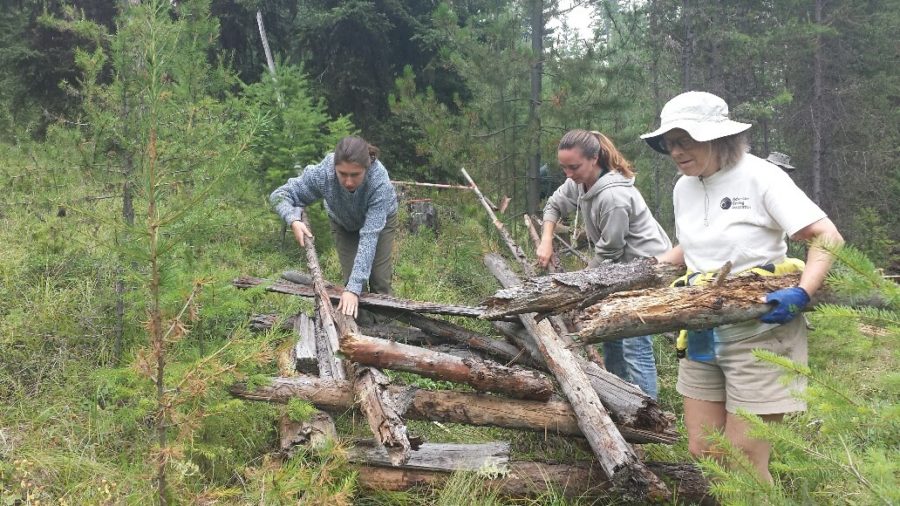
- Through ongoing volunteer help, OHA has been steadily improving the habitat for wildlife at the Lost Lake Preserve. View our photo album of habitat enhancement projects!
Amphibians
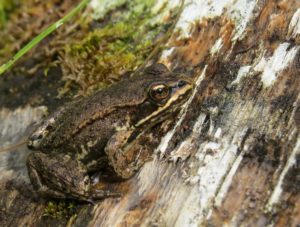
A wide variety of amphibians find everything they need to thrive in the Lost Lake Wetland.
The wetland hosts a healthy population of the State Candidate Species, Rana luteiventris, the Columbia Spotted Frog. This species is abundant in the Lost Lake wetland, though statewide it is ranked by the Natural Heritage Program as “Apparently Secure,” meaning that while they are at fairly low risk of extinction or elimination, there is “possible cause for some concern as a result of local recent declines, threats, or other factors.”
Beavers
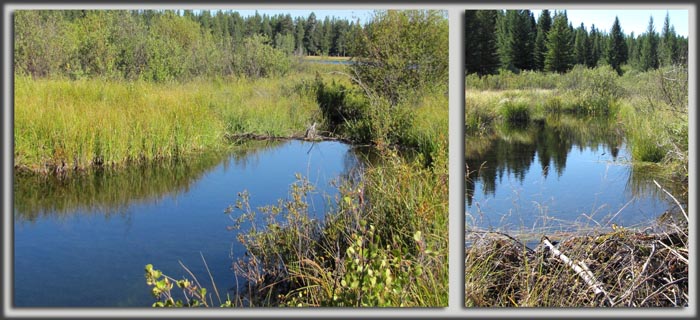
The recently reestablished beaver population in the Lost Lake wetland improves wetland function. Significant increases in the water storage capacity of the wetland caused by beaver activity will not only benefit the hydrology of the wetland and the nesting waterbird and plant populations, but will provide additional water for late season flows into the Myers Creek subwatershed.
Terns
Another waterbird of note that has traditionally nested at Lost Lake is the Black Tern, a Category 2 candidate for listing under the Endangered Species Act, and a bird-at-risk on the Washington Gap Analysis list. According to the Seattle Audubon Society (2008), Black Tern numbers have “decreased since the 1960s due in part to the destruction or degradation of much of their breeding…habitat.”
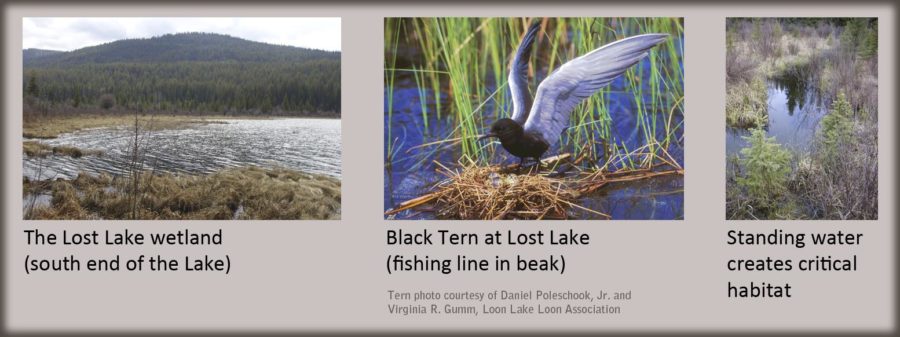
You may see these black and silver birds swooping to pluck food from the surface of Lost Lake or foraging in flight as they seize flying insects from the air. In order to nest, the Black Tern needs habitat with extensive cover vegetation as well as open water. Like the loon, the small and graceful tern nests on floating debris or near the water, making the Lost Lake non-combustible motor rule a key factor for successful nesting for both species.