Infographic: Following the Water
While the Buckhorn Mine was in operation, what was the local water used for? How was it treated? Follow along below!
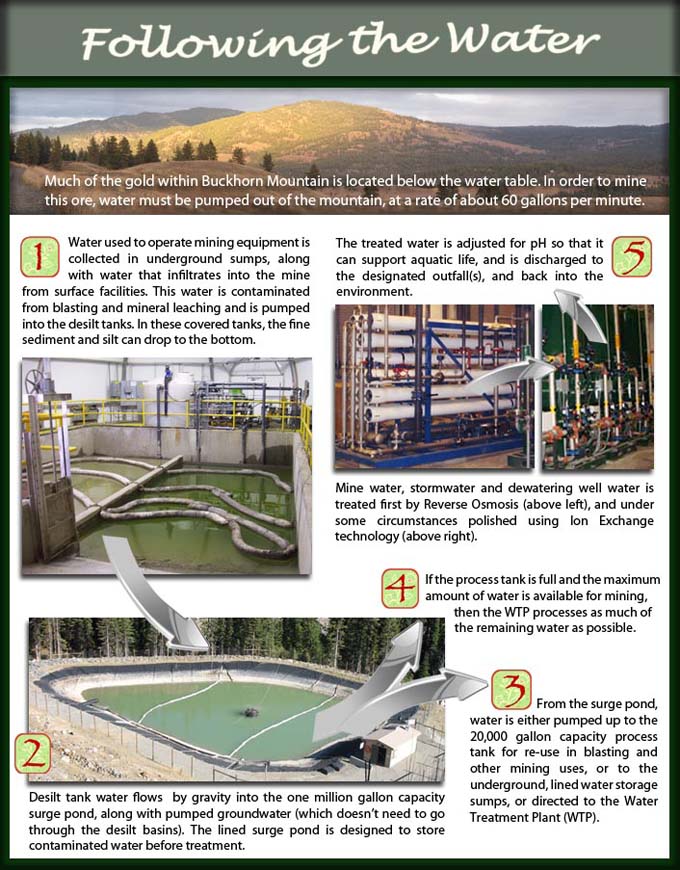
While the Buckhorn Mine was in operation, what was the local water used for? How was it treated? Follow along below!
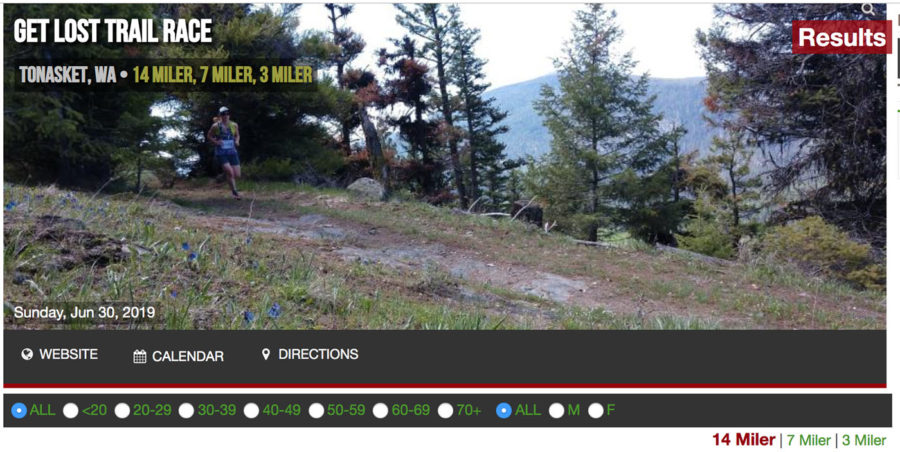
Fifty-six runners age 4 and up gathered at Lost Lake in the Okanogan Highlands on Sunday, June 30, to participate in OHA’s 2nd annual Get Lost! Trail Race event. This year, the fundraiser for OHA offered a 3-mile race in addition to the half-marathon, 7-miler, and free 1k kid’s race.
“A highlight of the day for me was the amazing people,” said AJ Baker, half-marathon winner for the men’s division, “especially considering I was an unfamiliar face to most, I felt so welcomed by everyone involved with the event.” He added, “the course and surrounding area were incredible. I’m glad there are opportunities like this to experience the beauty of the Okanogan!”
“It was a beautiful day,” said Erin VanderStoep, who ran the 7-mile distance. She added: “The sun was shining, the loons were laughing, and the wildflowers were in full bloom on top of Strawberry Mountain; it couldn’t have been a more beautiful course on a more beautiful day.”
A huge thank you to…
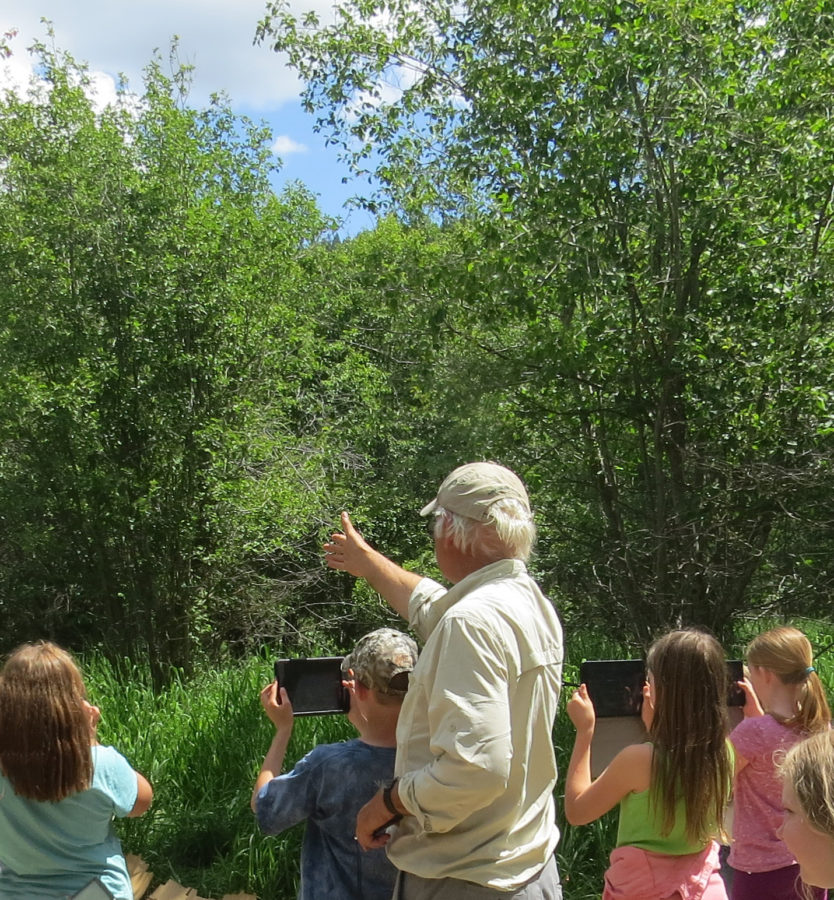
Many of us carry smartphones as cameras and for a few of our favorite apps, but are you curious about other apps that might help you explore the natural world?
Learn how to make your phone or tablet into a suite of resources for identifying a wide variety of natural elements, from wildflowers and wildlife to trees and mountain peaks. Participants can choose from our list of apps prior to the event, depending on what aspects of the natural world community members most want to explore. If you have a favorite app you think we should include on our list, email info@okanoganhighlands.org with your suggestion. See for a full list of
The group will visit a site with a panoramic view of the Pasayten Wilderness, and practice identifying peak names. We will then explore the Lost Lake Wetland and Wildlife Preserve, using apps appropriate for the species we encounter. After the event, participants are encouraged to enjoy Lost Lake with swimming, canoeing, or kayaking, and continued observations of the beautiful and diverse plant and animal species that make the lake and forest their home.
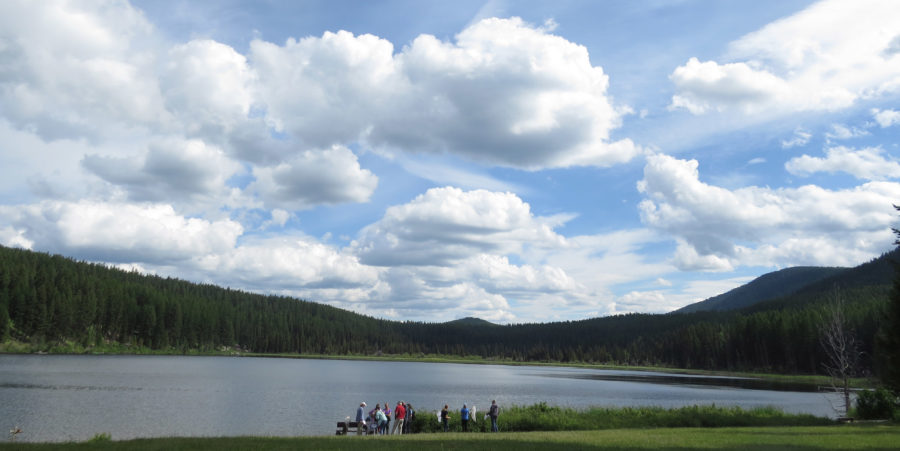
Due to the nature of the outdoor event, participation is limited, and priority registration is currently being offered for OHA members. A waiting list will be generated on a first-come, first-serve basis. To begin or renew OHA membership and be first in line to register for the summertime events, community members can donate online, or contact OHA for more information.
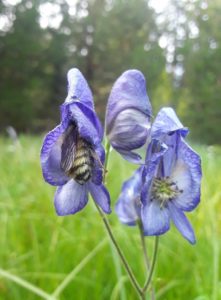
OHA’s bumble bee field trip on June 22, 2019 provided community members with an opportunity to learn about the bumble bee species in our area, their importance to our ecosystem, as well as ways we can help conserve them. In an effort to learn more about bumble bees to improve evidence-based bumble bee conservation guidance, the Xerces Society for Invertebrate Conservation, in partnership with the Washington Department of Fish and Wildlife, Idaho Department of Fish and Game, and the Oregon Bee Project, has launched the Pacific Northwest Bumble Bee Atlas. On a trip around the Okanogan Highlands, Rich Hatfield, Xerces Society conservation biologist, shared information about the Atlas Project, how to participate, and the value that the project will have to our area, both locally, and more regionally. The group conducted a point survey at Lost Lake to help determine the number of bumble bee species living there, along with a rapid habitat survey. More about the survey: www.pnwbumblebeeatlas.org/point-surveys.html
On March 14, 2019, the Washington Court of Appeals Division III brought oral arguments in Crown vs Ecology to the Okanogan County Commissioners Hearing Room. The case, in which OHA is an intervener, began with Crown appealing the 2014 renewal of the discharge permit for the mine. After a seven-day trial-like hearing in January 2015, the Pollution Control Hearings Board, decided in favor of Ecology and OHA, affirming that the water surrounding the Buckhorn Mine must be left almost as clean as it was before mining. Crown appealed that decision to the Ferry County Superior Court where Crown also lost. Crown appealed to the Court of Appeal. Crown has asserted that the permit should be stayed (on hold) until the appeal process is exhausted. This assertion has been rejected in each stage of the appeal. While Ecology has issued Notices of Violation, the agency has not yet taken further enforcement action regarding the hundreds of violations.
Click here to listen to the recording of the arguments of this case, #351998.
While underground mining reduces the impacts when compared to the previously proposed open pit, significant water quality and quantity issues remain.
In April 2009, the first annual meeting took place to review the Water Year 2008 monitoring reports. The purpose of the meeting was to provide input towards the discussion of the adequacy of the monitoring plans, to monitor the hydrologic aspects of the Buckhorn Mine and mitigation, and to suggest modifications that might be needed for adaptive management. The annual reporting requirements are extensive.
After brief introductions including representatives from Washington State Department of Ecology, and Washington State Fish & Wildlife, the USDA Forest Service, Crown/Kinross, Golder Associates and OHA, OHA started the meeting off with an overview of our issues and concerns and a presentation by our consultant Ann Maest of Stratus Consulting.
OHA expressed grave concern over the failure of Crown/Kinross to submit reports required by the Hydrologic Monitoring Plan that are needed to understand the impacts of the mine. Crown/Kinross consultant, Golder submitted nine technical memos to the agencies that related to the Adaptive Management Plan. The memos were not integrated and were poorly organized. There was no table of contents or index and it was difficult to discern if requirements were met. We expressed our concern and frustration that there was not enough time to accomplish the objectives of the annual coordination meeting in the four hours allotted to it. Many of the agencies in attendance also expressed concern regarding the completeness and organization of the memos that were presented. Because of the incompleteness and poor organization of last year’s reporting and lack of time, we never actually got to the point during the annual meeting of discussing the adequacy of the plans or if modifications may be needed.
Since that time OHA has done an extensive review of the plans to develop a comprehensive matrix of annual reporting requirements and their degree of completion for 2008. After reviewing the memos and reports, in cooperation with Kinross, OHA finds the 2008 annual reporting incomplete and lacking basic foundational data needed to analyze the mine’s impacts or the accuracy of model predictions. OHA’s analysis shows that the reporting does not meet the requirements of the plans.
OHA presented a series of graphs and maps showing location of increasing levels from baseline of nitrate, sulfate, ammonia, and chloride.
Annual Reporting Requirements:
Baseline (Conditions that existed before construction and mining):
Analytical Issues:
Missing Analysis:
Mine Inflow Water Quality: Measured vs. Predicted
Southwest Zone: higher than predicted sulfate, aluminum, arsenic, fluoride, lead, manganese, nitrate, and zinc–Makes treatment more difficult than expected
Flow Evaluations:
OHA’s analysis after almost one year of operations was hindered by incomplete annual monitoring and reporting of data. The monthly monitoring of surface and ground water around the mine shows that specific constituents continue to rise above baseline although they remain below standards. We consider the lack of annual monitoring reports specific to each requirement of the Hydrologic Monitoring Plan a potential permit violation. OHA acknowledges that some of the required information may be included in the Adaptive Management Plan memos but, we do not believe this meets the permit requirements. Kinross has expressed a commitment to get it right.
Possible Violations:
Measured vs. Predicted Flow Issues:
Other Issues:
Locations for Additional Flow: Adaptive Management

Overall OHA expressed concern that predictions of operational and post-closure water quality were too optimistic, due in large part to underestimation of contaminant concentrations from geochemical testing results. The amount of rock predicted to become acidic over short and longer time frames were also underestimated, and plans for management and identification of acid-generating rock poorly defined. (See page 5 of Buckhorn Bulletin, March 2008)
Some general and specific examples of issues related to the 2008 annual reporting requirements are as follows:
For example:
It is not enough to simply say, “We will do better next time.” Ground and surface water predictions need to be reevaluated and improvements need to be made as part of adaptive management for the mine.