New Documentary Released! Working With Nature: An Ongoing Story of Wetland Regeneration
We are so excited to announce the release of OHA’s new documentary, Working With Nature: An Ongoing Story of Wetland Regeneration

This short film paints a picture of process-based restoration as an act of reciprocity. Through hands-on efforts like planting native vegetation and constructing beaver dam analogs, Okanogan Highlands Alliance seeks to heal a degraded stream and wetland system – not by imposing control, but by listening, learning, and partnering with the ecosystem.

Found near Chesaw, Washington in the Okanogan Highlands, Triple Creek is part of a creek-floodplain system that historically supported a complex, diverse wetland. A rain-on-snow event in the late 1990’s caused the creek to incise and straighten. The wetland drained, losing its ability to slow and store water and to support wetland species. 

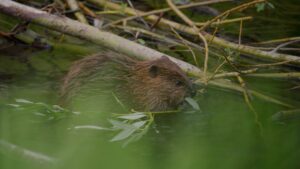
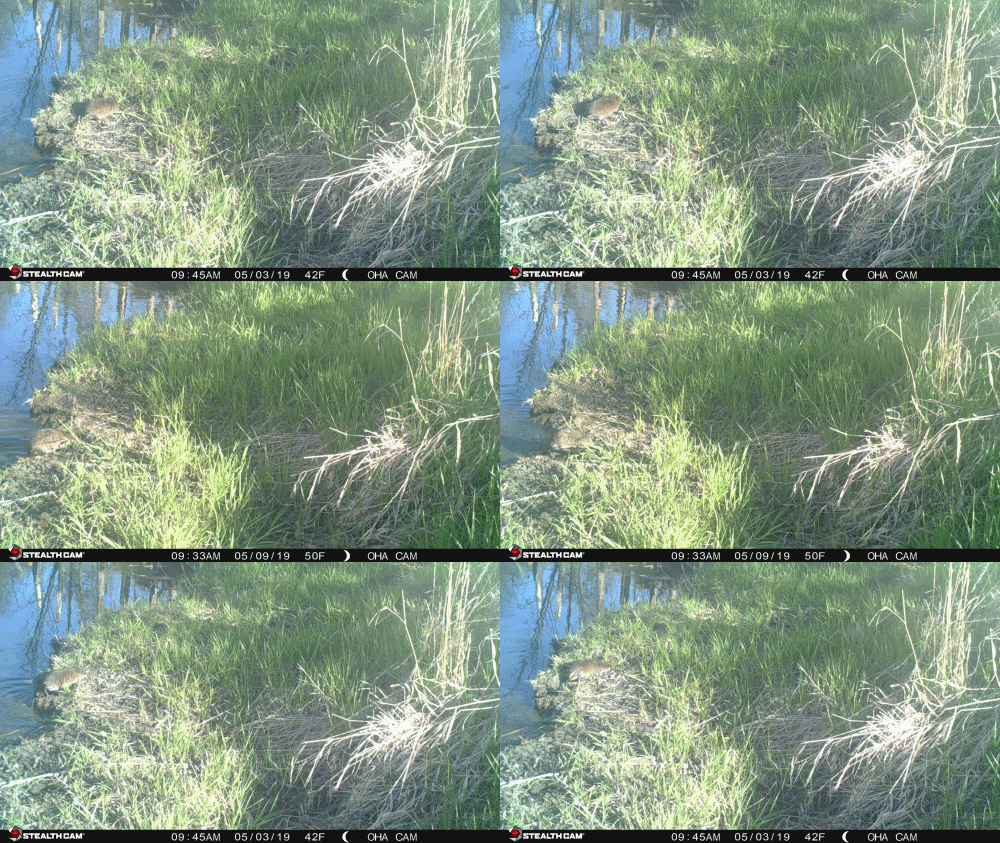
As water slows down, spreads out, and wets the ground, native vegetation grows and flourishes, enabling diverse species, including beaver, to return to the wetland. The film explores how restoration is more than science – it’s a relationship. Woven through the physical labor are reflections on gratitude, responsibility, excitement, and what it means to repair harm done to  living systems. By working with nature, we begin to regenerate the natural world that sustains us all.

Click here to learn more about Triple Creek and watch the film!
World Wetlands Day 2019

Wetlands around the world protect communities while helping fight climate change

As the world grapples with climate change, those commemorating World Wetlands Day Feb. 2 are highlighting the importance of restoring, conserving, and wisely using wetlands because they can help reduce floods, relieve droughts, and buffer coastlines from extreme weather.

In the state of Washington, we work every day to protect and manage wetlands. The environmental and economic benefits they provide nature, our communities, and way of life are immeasurable…

To help celebrate World Wetlands Day, the WA State Department of Ecology selected the Triple Creek project to feature on their blog. Click here to read the full article.

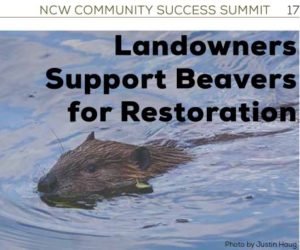
Landowners Support Beavers for Restoration

In 1980, a group of like-minded individuals purchased over 500 acres of land along Myers Creek north of Chesaw, on a site now known as Triple Creek. They formed an intentional community based on simple living and sustainable paths for securing food and shelter. Several households now live on this Okanogan Highlands landscape of forests, meadows, wetlands, and riparian areas. A primary goal of the community is improving and restoring wildlife habitat for native species. Members have developed a forest management plan, rehabilitated overgrazed pastures, and reduced noxious weeds, thus reestablishing native plants. By engaging with local non-profits and agencies for wetland restoration, the community is creating a legacy to benefit future generations…

Read more about the role of the land stewards and the development of this collaboration in this 2015 IRIS (Initiative for Rural Innovation & Stewardship) Success Supplement excerpt.

Tonasket Outreach School

Each spring since 2016, students from the Tonasket Outreach Program have been invited to participate in Triple Creek restoration project. During the first field trip, a group of 23 students of all ages, and six adult volunteers came out to the site and helped with planting trees and shrubs, building perches for birds of prey, taking photos to monitor the site, and participating in educational activities that illustrated the connections between producers and consumers in the web of life.

Participation at Triple Creek offers a bounty of ongoing learning experiences for the students of Outreach. Their classroom teacher, Sonja, has been leading students in research on riparian buffer zones. Grades 3-6 have been learning about photo monitoring, and helping to organize documentation of the project. They have also been able to celebrate the return of beaver to the creek! There will be a variety of opportunities for students of all ages to be involved throughout the school year, culminating in a return field trip in the spring. At that time students observe major changes that have occurred in the stream since their previous visit. They will see the instream structures that OHA and our team have constructed, and the ways in which these structures have mimicked beaver dams.

In 2019, the Outreach students are merging music and science with OHA’s Conservation Coordinator, Julie Vanderwal, as they compose a song to tell the story of change at Triple Creek. Later this spring, Outreach took another field trip to the project site to observe its improvement and to help plant more willow saplings in the riparian buffer zone around the streams. OHA appreciates all the work the Outreach teachers have done to coordinate these valuable experiences for the students, and the many volunteers who make the field trips possible.

This exposure offers valuable insight into multiple facets of science and study. They have been introduced to various fields and disciplines that can inspire and expand their opportunities for the future, including wildlife biology, watershed ecology, botany, geology, and field studies. They are learning about data collection and analysis, record keeping, wildlife photography, and the scientific method of observation. By maintaining connectivity throughout this process we are encouraging an ongoing relationship with these local ecosystems that will last beyond the memory of a single field trip, and encourage stewardship in our future generations.

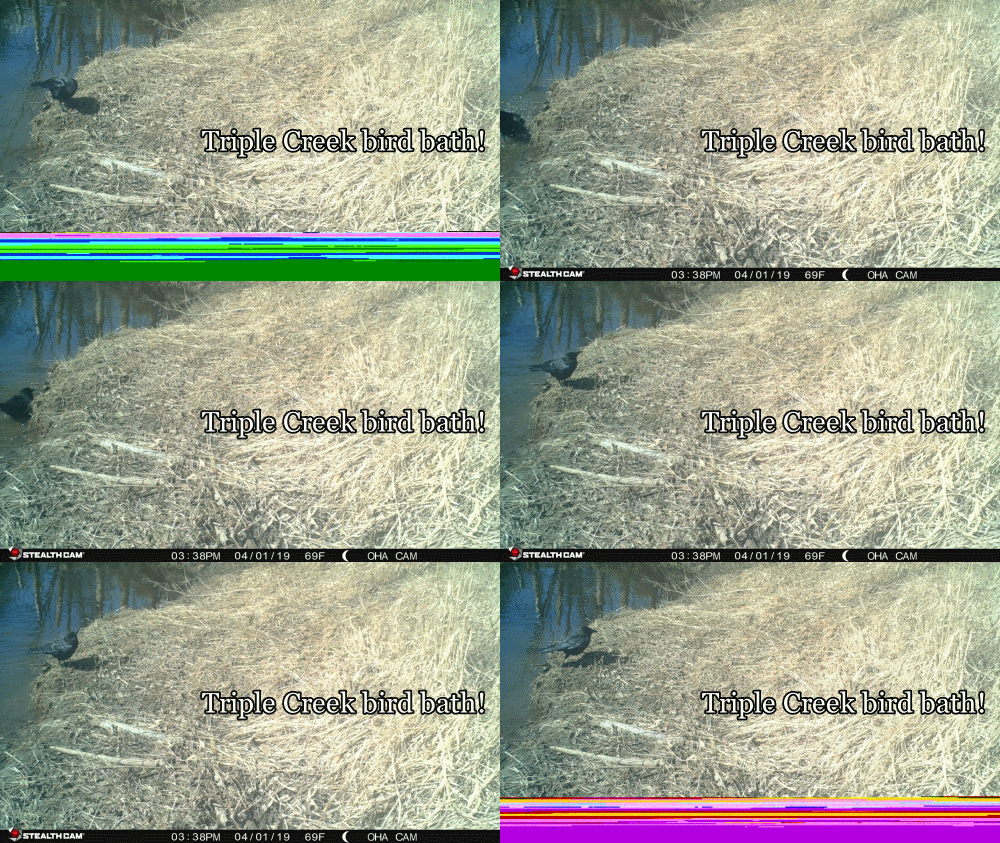
Birds

Raising the water level to the historic floodplain facilitates wildlife access to the creek!

Go Back